


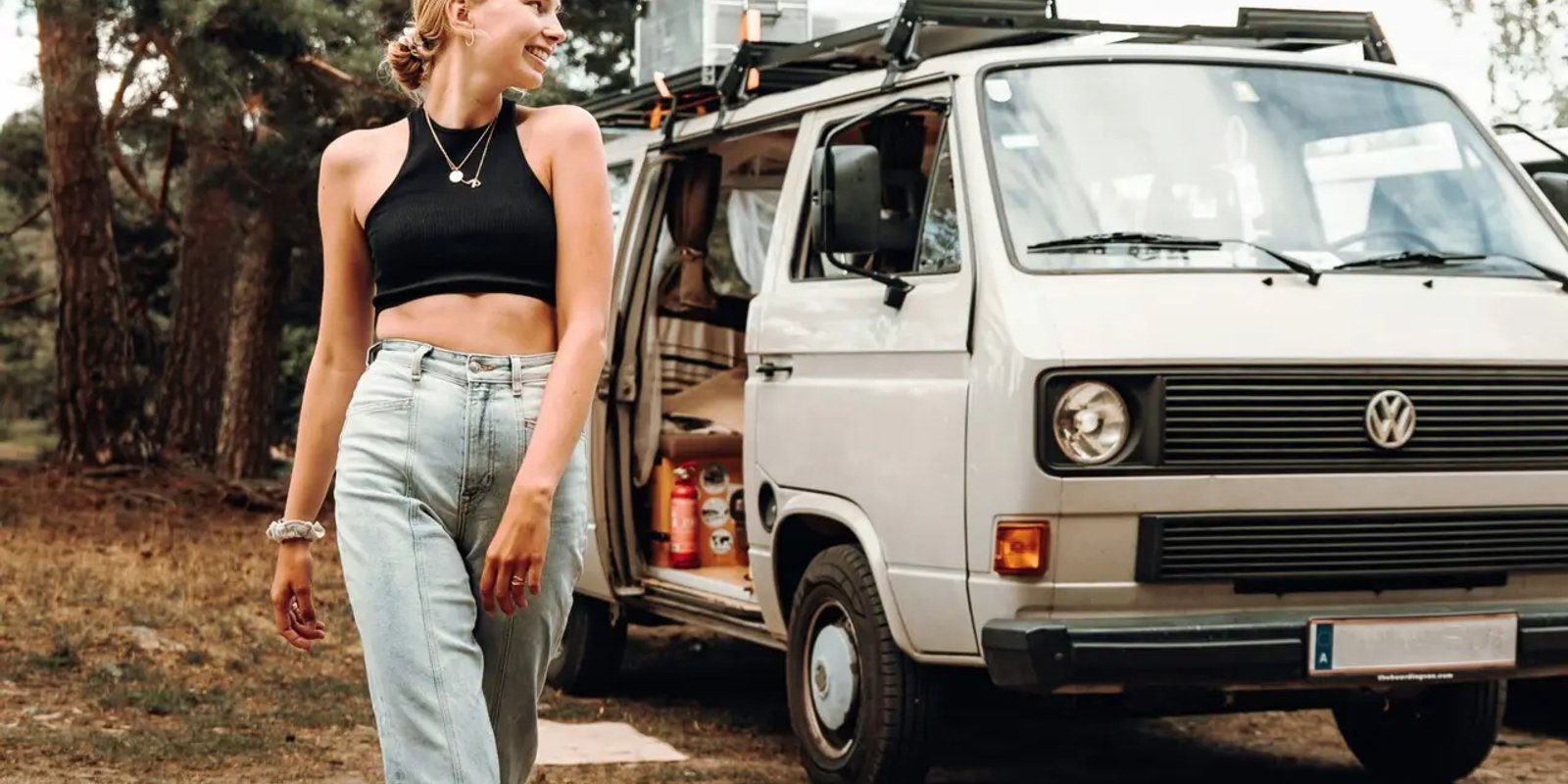

We built our van over four months and drove it for two years across Europe before taking a break to update this site. In that time, some of our decisions aged brilliantly and some aged terribly. This is the honest review.
What we'd keep exactly the same
The permanent fixed bed running lengthwise. This is the one vanlife build decision where we have no regret at all. A permanent bed — no lifting, no converting, always made up — removes a daily friction point that drains more energy than you'd expect. We sized it at 200 × 120 cm, which fits two adults comfortably. If you're considering a fold-out system to gain floor space, sleep in both configurations first. Most people end up regretting the conversion setup.
Full height ceiling insulation with sheep's wool. Expensive and time-consuming to install, but it transformed temperature stability. The van holds heat overnight in winter and stays 10°C cooler in mid-summer with the roof fan running. Spray foam fills cavities; sheep's wool does everything else. The combination of the two with zero thermal bridging is worth the extra week of build time.
Cabinet frames in aluminium angle, not wood. Lighter, doesn't swell in humidity, doesn't rot if water gets in (and water always eventually gets in somewhere). The frames are still solid after two years of dirt tracks and mountain switchbacks.
What we'd do differently
The kitchen layout. We put the sink opposite the hob, which meant crossing the van with hot pans. Move the sink and hob to the same side. This sounds trivial. After two years of daily cooking it isn't. Place everything you use in one cooking sequence within arm's reach of where you stand.
The 60 L fresh water tank. We thought this was generous. In summer in Portugal, two people go through 60 L in two days: cooking, drinking, cleaning dishes, a basic sponge wash. A 100 L tank changes how freely you use water and how often you need to refill. Water fill points are common but not always convenient.
The position of the electrical system. We built ours behind a panel under the bed — sensible for aesthetics, less sensible when the BMS needed resetting at 1 am in a dark carpark in Bosnia. Move the circuit breaker, fuse board and main battery isolation switch somewhere accessible without removing bedding.
The grey water tank. We went with a 10 L collapsible container that attached under the sink drain. It leaked within three months. Install a proper fixed grey water tank, or at minimum run the drain to a secure external point you can connect a container to without leaks. Spilling grey water inside a van is its own special category of unpleasant.
The single upgrade that changed everything
A roof fan. Specifically, a Maxxair 00-07500K with a rain-sensing automatic close.
We installed it in month four after one week of sleeping in 35°C heat in Spain with every window cracked. A reversible roof fan running on exhaust mode moves an extraordinary amount of hot air. At night with the window cracked at the far end of the van, it creates a through-flow that keeps the temperature within 5°C of outside air. In summer in the Mediterranean, this is the difference between sleeping and lying awake sweating.
On an EV van: a roof fan uses about 1–2 A. Running it all night uses roughly 10–15 Wh. Your climate control would use ten times that. It is the most energy-efficient way to manage summer sleeping temperatures that exists.
Things we thought we'd use but didn't
- The awning. Beautiful in the builder videos; in practice we deployed it maybe 15 times in two years. Wind made it unusable more often than not. If we rebuilt, we'd skip the permanent awning and use a freestanding pop-up shelter instead.
- The second leisure battery. 200 Ah was more than enough for two people for multiple days without driving or hookup. The second battery added weight and cost we never needed.
- The built-in water heater. Cold water is fine for most van tasks. A small immersion coil or a solar shower bag heats water for an outdoor rinse without a complex plumbed system.
What matters most for long-term livability
If we had to distil two years into one piece of advice, it would be this: optimise for the daily routine, not the setup video. The build decisions that matter most aren't the dramatic ones — the beautiful kitchen splashback or the custom roof deck — they're the small frictions repeated a thousand times. Where do you put your keys when you get in? Where does wet gear live? Can you find the torch without waking the other person?
Walk through a full day in your head before you drill a single hole. Do it again a week later. The van that lives best is the one designed around how you actually live, not how you imagine living.