
01
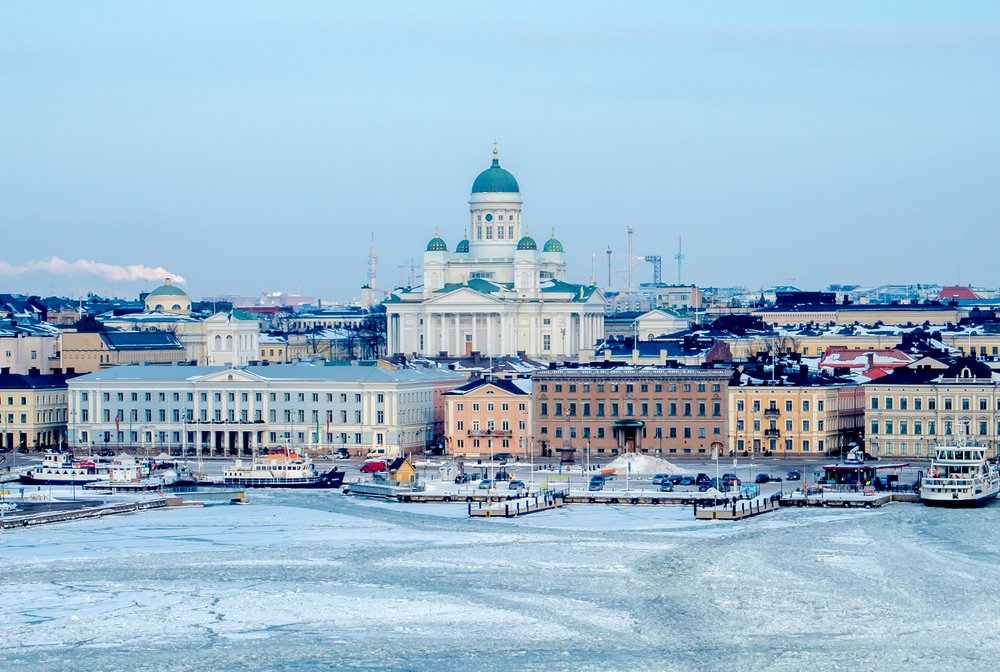
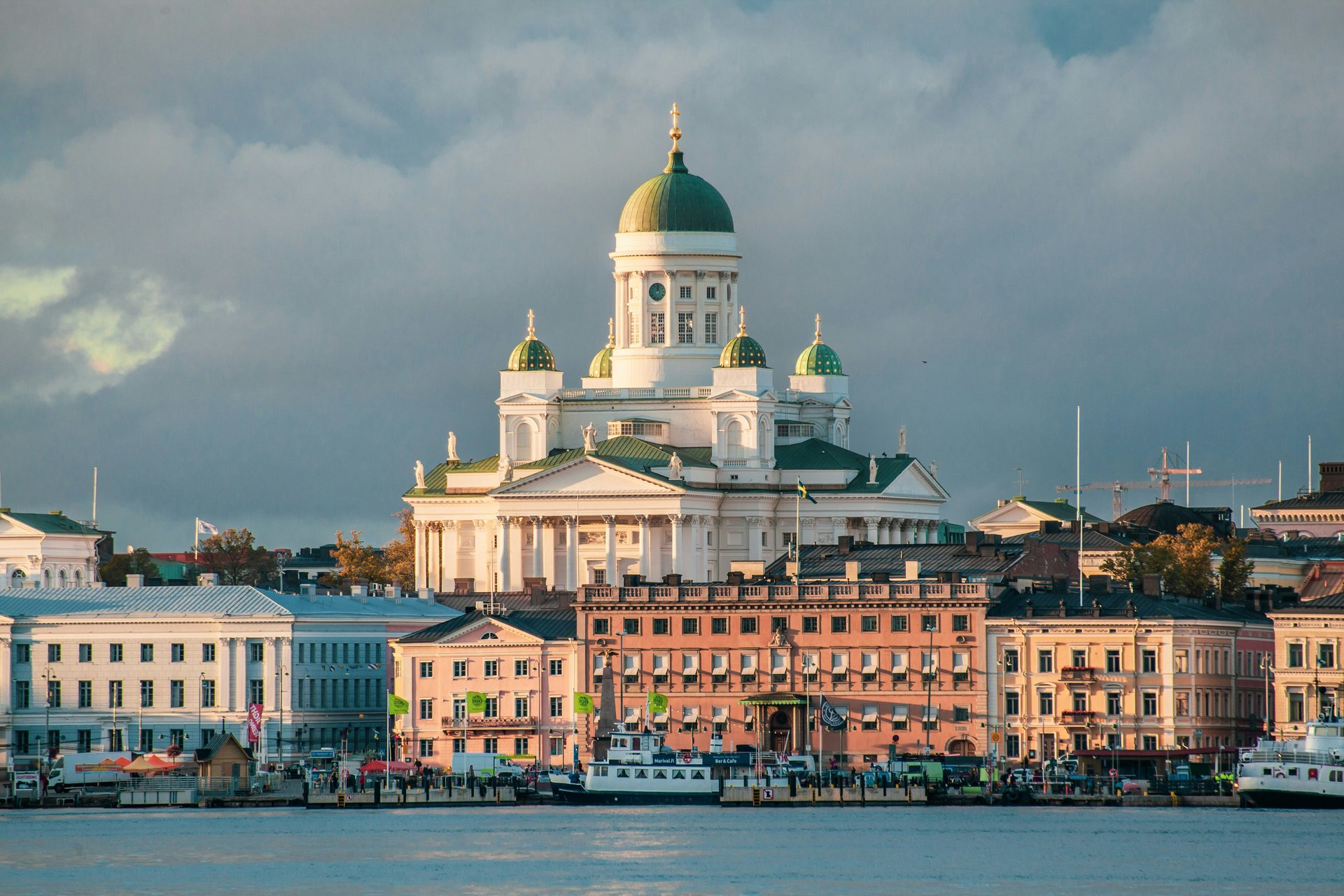
Helsinki
A compact, design-forward capital on the Baltic. Wander the market square, take the short ferry to the Suomenlinna sea fortress, and spend an afternoon in the Design District before heading out of the city.
Endless lakes, silent forests, the Arctic Circle & a legal right to camp almost anywhere
Finland is one of the least crowded, most rewarding countries in Europe for vanlife, mostly because of a single law: Jokamiehenoikeus, the Everyman's Right. It lets you pitch up almost anywhere for a night or two, for free, without asking permission. Combine that with around 188,000 lakes, dense pine and birch forest, a coastline scattered with granite islands, and Lapland stretching north past the Arctic Circle, and you get a country built for slow, self-sufficient travel.
It is not a country that rushes you. Distances are long, especially once you head north, and summer and winter feel like two entirely different destinations. Come for the midnight sun and lake swimming in July, or for the Northern Lights and snow-covered forest roads in the depths of winter. Either way, Finland rewards patience with genuine solitude.
Finland rewards those who go north and those who slow down on the coast: here's where to point your van.
A compact, design-forward capital on the Baltic. Wander the market square, take the short ferry to the Suomenlinna sea fortress, and spend an afternoon in the Design District before heading out of the city.
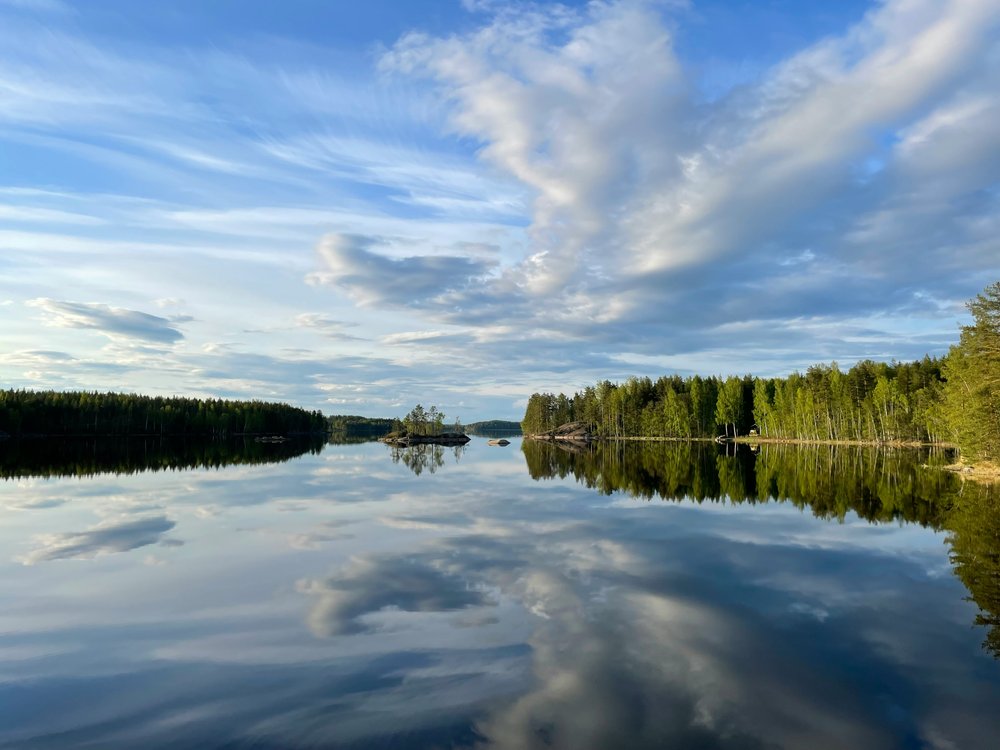
The heart of the country: Lake Saimaa is Finland's largest lake, a maze of channels, islands, and pine shoreline. Savonlinna's medieval Olavinlinna castle sits right in the water. Slow lake life, sauna evenings, and quiet paddling.
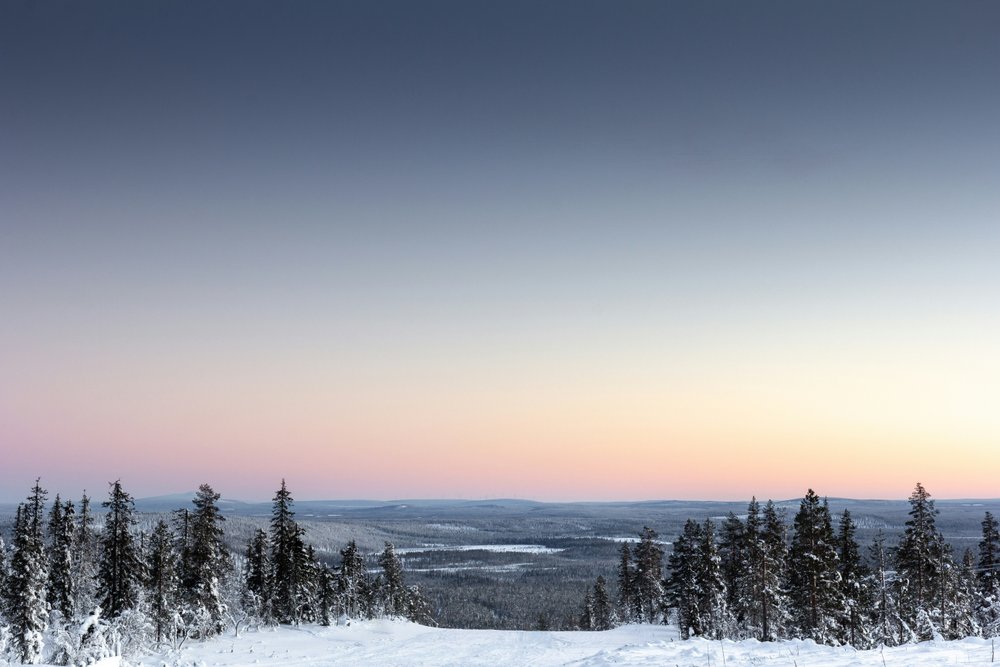
The Arctic Circle runs right through Rovaniemi, the official home of Santa Claus. Beyond the theme, this is a launchpad for genuine wilderness: fells, reindeer, husky trails, and some of Europe's darkest, clearest night skies.
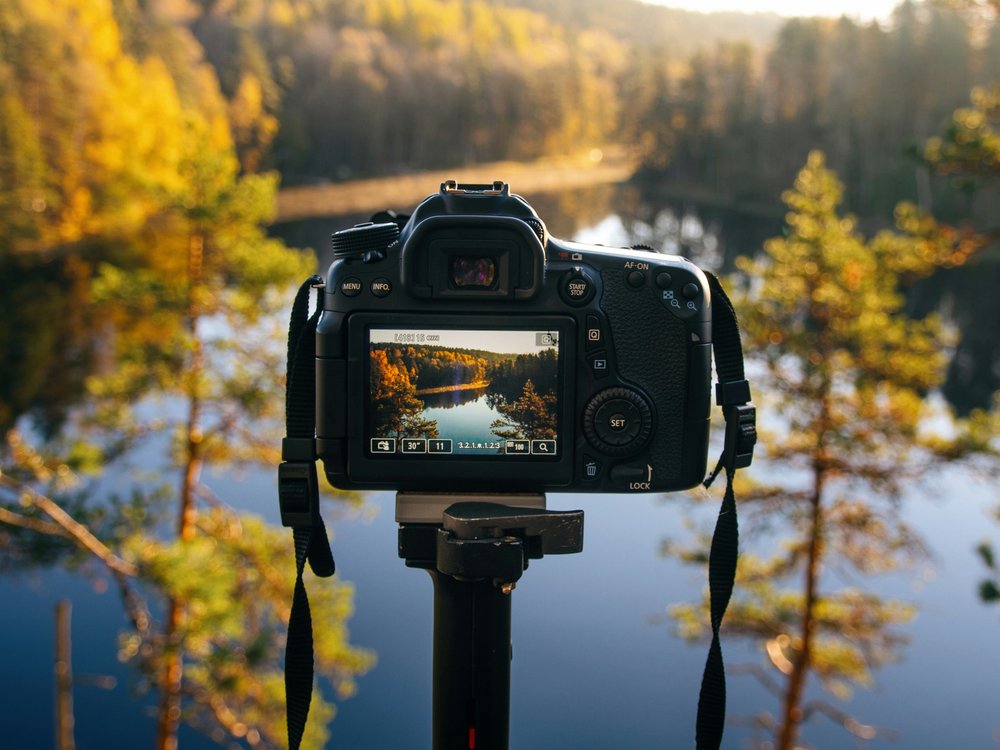
A proper wilderness escape barely half an hour from Helsinki. Rocky ridges, forest lakes, and marked trails of every length make it the easiest way to experience Everyman's Right camping without committing to a long drive north.
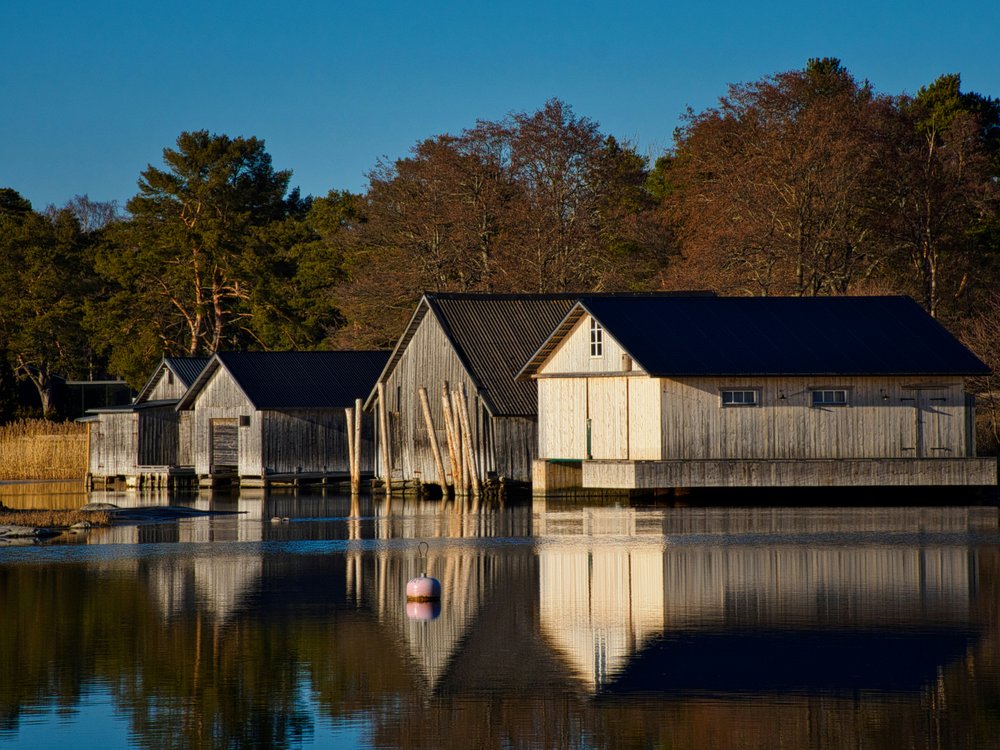
An autonomous, Swedish-speaking island region reached by ferry from Turku or Sweden. Thousands of islands connected by bridges and free cable ferries, flat cycling roads, red timber cottages, and a noticeably slower pace of life.
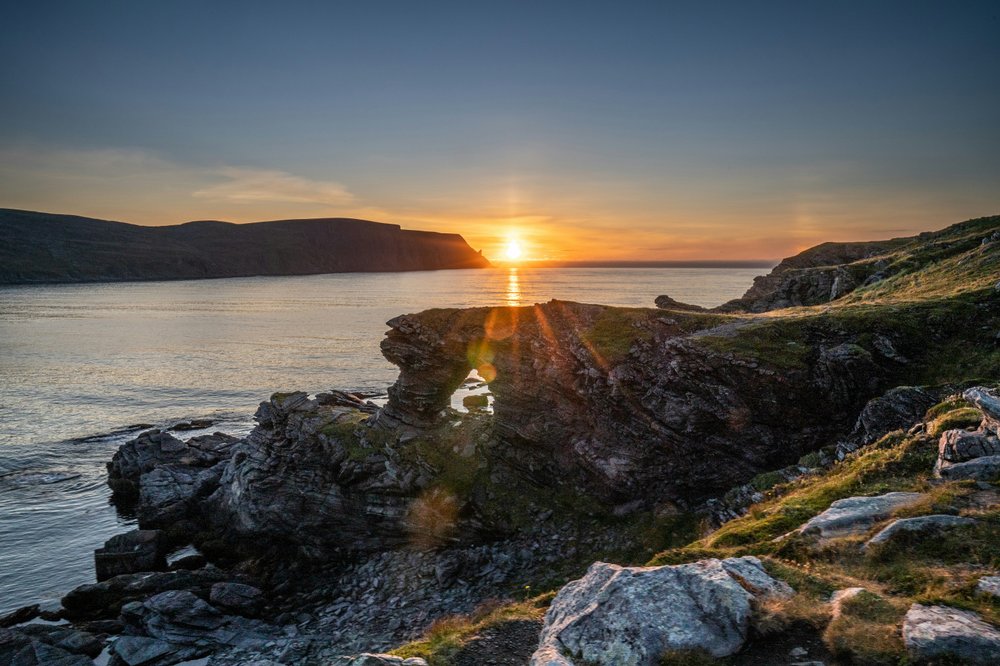
The same latitude gives you two opposite spectacles. In winter, Lapland's clear, dark skies are one of Europe's most reliable places to see the Aurora Borealis. In summer, the sun barely sets, and driving at 1am feels like mid-afternoon.
Finland is straightforward to drive, but distances, seasons, and a few local customs deserve some planning.
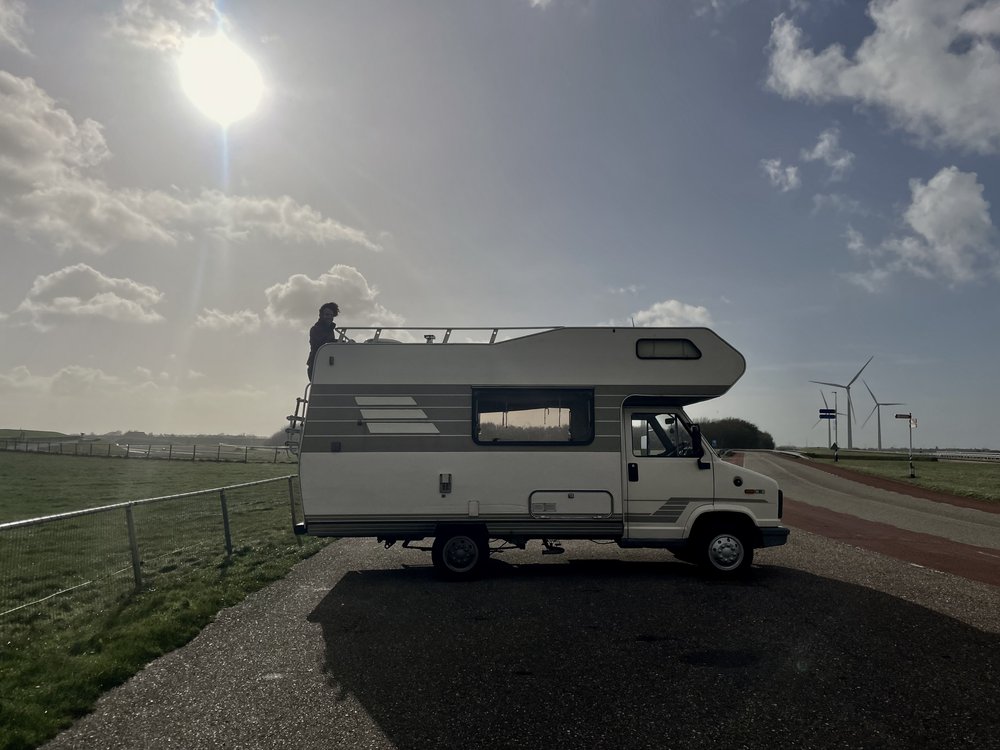
Jokamiehenoikeus gives everyone, resident or visitor, the right to roam and camp on most land in Finland, public or private, without asking the owner. In practice this means you can pitch a tent or park up for one to two nights almost anywhere that isn't someone's garden, a cultivated field, or immediately next to a dwelling. A commonly used rule of thumb is to keep a reasonable distance from houses, generally at least 100 to 150 metres, and to move on rather than settle in for longer.
The right applies to people, not vehicles. Driving or parking off marked roads and tracks needs the landowner's permission. Open fires also need permission unless you're in a genuine emergency, so stick to the free public fire rings (laavu shelters and nuotiopaikka sites) found throughout forests and national parks. Some protected nature reserve zones restrict or ban overnight stays entirely, so check signage.
Finland's short, intense summer brings a genuinely large mosquito population, and it's at its worst in Lapland's marshes and along still lake shores from roughly mid-June through August. Warm, windless evenings near water are when they're most active. It rarely ruins a trip, but it catches unprepared travellers off guard.
Finnish winters are long and genuinely cold, with Lapland regularly seeing minus 20°C to minus 30°C, and daylight in the far north shrinking to just a few hours, or none at all during the polar night around midwinter. Roads are well maintained and gritted, but conditions demand real preparation.
Finland is genuinely said to have more saunas than cars, and the sauna is a weekly, sometimes daily, ritual rather than a spa treat. Most campsites and holiday cottages have one, often lakeside, often wood-fired, and it fits vanlife naturally: a hot sauna followed by a cold lake swim is the classic combination, in both summer and winter.
Helsinki to Rovaniemi is around 830 km, roughly nine to ten hours of driving without stops, and the country stretches hundreds of kilometres further north than that into genuine wilderness. Fuel stops, services, and towns become noticeably more spread out the further north you go.
Semi-domesticated reindeer roam freely across Lapland and often stand or cross directly on the road, sometimes in groups, and they don't reliably move for traffic. Further south, wild elk (moose) cross forest roads and are large enough to cause serious accidents on impact. Warning signs mark the highest-risk stretches, but animals appear outside those zones too.
One route heads deep into the Arctic, the other stays close to the coast and hops between islands.
From the capital, through the Lakeland, up the coast, and across the Arctic Circle into reindeer country.
A shorter, easier loop for a first taste of Finland: capital city, historic coast, and a slow island crossing.
Real vanlifers, real moments, submitted by people just like you.
Be the first to share a photo from Finland
Submit yours below ↓Your turn
Your photos, Everyman's Right pitches, and honest stories help thousands of other vanlifers plan better trips. We review every submission and feature the best ones on this page.
Continue your journey
Finland sits right at the edge of the Nordic loop. Here's where most vanlifers head next.